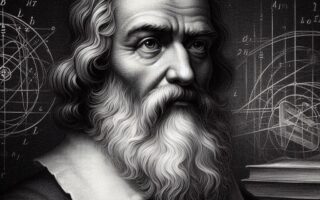
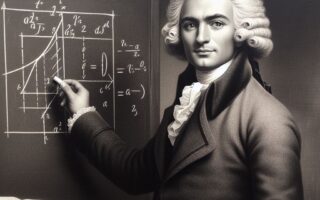
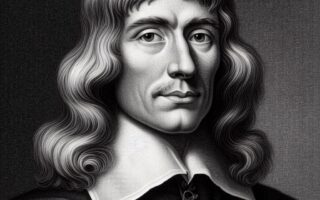
In the grand narrative of scientific history, certain names shine brightly—Galileo, Newton, Leibniz—but behind many of these giants stand Isaac Barrow and other lesser-known figures whose insights and mentorship made monumental breakthroughs possible. Isaac Barrow (1630–1677), a remarkable mathematician, classical scholar, theologian, and teacher whose foundational work in mathematics, particularly in the early development of calculus, laid the groundwork for the revolutionary discoveries of his most famous student: Isaac Newton.
Though not as widely celebrated, Barrow was a scholar of formidable intellect and range, whose contributions echo through the development of modern mathematics and science.
Early Life and Education
Isaac Barrow was born in London in 1630 into a relatively prosperous family. His father, Thomas Barrow, was a linen draper who ensured Isaac received a classical education. After a turbulent youth—including fights and rebellious behavior—Barrow found his way academically, attending Charterhouse School and then Peterhouse, Cambridge, before finally transferring to Trinity College, Cambridge, where his intellectual rigor flourished.
Barrow’s university years were marked by exceptional scholarly achievements. He gained recognition for his brilliance in classical studies, particularly Greek and Latin, but his growing passion for mathematics soon emerged. His education was interrupted by the English Civil War, but this period of upheaval also sharpened his sense of inquiry and philosophical depth.
Barrow’s Role at Cambridge
Barrow was elected a Fellow of Trinity College in 1649, and in 1663, he was appointed the first Lucasian Professor of Mathematics at Cambridge—a position that would later be occupied by none other than Isaac Newton.
During his tenure, Barrow focused on improving the quality of mathematics instruction at Cambridge. He aimed to elevate the discipline beyond arithmetic and geometry into the emerging field of mathematical analysis. Barrow was not only an academic but also a passionate educator, and his lectures laid the conceptual framework that would later be crystallized into calculus.
One of Barrow’s most influential decisions came in 1669, when he resigned his Lucasian Chair in favor of his student, Newton. This act of humility and foresight would prove pivotal for the future of science.
Mathematical Contributions: A Precursor to Calculus
Barrow’s most significant mathematical legacy lies in his work on tangents, integration, and the relationship between differentiation and integration. In many respects, Barrow developed the core ideas of calculus before Newton and Leibniz formalized them.
His treatise “Lectiones Mathematicae” (Mathematical Lectures), published posthumously in 1683, covered advanced geometry and included the first known geometric proof of the fundamental theorem of calculus—that differentiation and integration are inverse operations.
In his “Lectiones Geometricae”, Barrow presented techniques for determining areas under curves and tangents to curves. Though he used geometric rather than algebraic notation, his ideas were conceptually aligned with the emerging principles of calculus.
Barrow’s approach was steeped in the Greek tradition of geometrical rigor, echoing Archimedes, but he was also remarkably modern in his treatment of motion and change—concepts central to calculus. His methods involved:
- An early understanding of limits
- Geometric intuition to approach problems of instantaneous rate of change
- Foundational ideas about infinitesimal quantities
These ideas strongly influenced Newton, who expanded on them and added the symbolic notation and mechanics that would launch the Newtonian revolution.
Barrow as Newton’s Teacher and Influence
The mentor-student relationship between Isaac Barrow and Isaac Newton is one of the most important in scientific history. Barrow quickly recognized Newton’s extraordinary talent and, in a rare and selfless act, stepped down from the prestigious Lucasian Professorship to allow Newton to take his place at just 26 years old.
Barrow’s writings were among the key texts Newton studied, and his work clearly informed Newton’s development of fluxions (his term for derivatives) and integrals. Barrow didn’t use algebraic notation or express calculus in the form we use today, but Newton saw the deeper insights and generalized them with analytical precision.
It is no exaggeration to say that without Barrow’s instruction, mathematical foundation, and encouragement, Newton’s theories—ranging from calculus to gravity—might not have developed as they did, or as quickly.
Scientific and Theological Interests
Isaac Barrow was not solely a mathematician; he was also deeply immersed in natural philosophy and theology. He believed that the study of nature was an act of understanding God’s creation, a common sentiment among intellectuals of the time. In this way, his work bridged the divide between science and religion.
He wrote extensively on theology and became Master of Trinity College in 1672, a position he held until his death. Under his leadership, Trinity became a major center of scientific and philosophical inquiry.
Barrow’s theological writings, while separate from his mathematical work, reflected his analytical mind and ethical convictions. He was known for his eloquence and clarity, qualities that made him a beloved teacher and preacher.
Barrow’s Legacy and Historical Significance
Though his name is not as commonly referenced as Newton’s or Leibniz’s, Isaac Barrow’s impact on the history of mathematics is profound. He occupies a crucial place in the evolution of mathematical thought:
As a transitional figure, Barrow bridged the gap between classical geometry and the analytic, calculus-based mathematics of the modern era.
As a mentor, he shaped the early intellectual development of Newton, arguably the most important scientific mind of the 17th century.
As a mathematician, his geometric treatment of calculus laid a rigorous foundation that was critical to the eventual formalization of the discipline.
Today, Barrow is often remembered as the man who handed the baton to Newton. But he was more than a conduit—he was a mathematical pioneer, a gifted teacher, and a brilliant thinker in his own right.
Conclusion
Isaac Barrow may not be a household name, but his contributions to mathematics and science are woven into the very fabric of their development. By pushing the boundaries of geometric thinking, laying the foundation for calculus, and nurturing one of history’s greatest scientific minds, Barrow secured his place as a quiet but powerful force in the intellectual revolution of the 17th century.
As we trace the evolution of calculus, physics, and scientific reasoning, we find in Isaac Barrow a hidden architect of the Enlightenment—a man whose intellect and humility helped shape the modern world.
Please Visit Our Sponsors:
We only support vendors that we use ourselves in our home. The links below are our own links or affiliate links but know that we use all of these now, or have in the past. As the author/creator of this blog, I also tutor mathematics on Wyzant, sell on Etsy, create content on TpT, and learn Korean on Rosetta Stone.