Euclidian Geometry

Euclidean geometry is one of the cornerstones of mathematics, shaping our understanding of space, structure, and relationships between shapes. Originating in ancient Greece, this branch of geometry owes its name and foundation to the Greek mathematician Euclid, often referred to as the “Father of Geometry.” Euclid’s work, Elements, provided a systematic and logical framework for …

Logarithms

Logarithms

The History of Logarithms Logarithms, a fundamental mathematical concept, have significantly shaped the development of mathematics, science, and technology. By transforming complex multiplications into simpler additions, logarithms revolutionized calculations and laid the groundwork for advances in astronomy, engineering, and physics. The Origins of Logarithms: Napier’s Insight The concept of logarithms was first introduced in the …

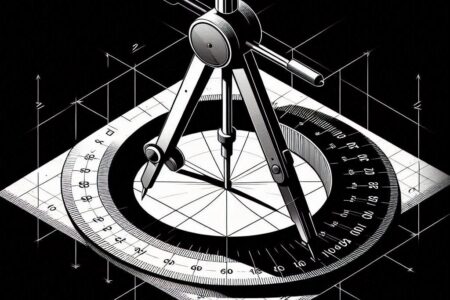
Geometric Construction

Geometric Construction

The History of Geometric Construction Geometric construction is one of the oldest and most fundamental branches of mathematics, tracing its origins back to ancient civilizations. The use of geometry to construct shapes, angles, and figures without the aid of measuring tools—other than a compass and straightedge—has fascinated mathematicians for millennia. The principles behind geometric construction …

The Ishango Bone

The Ishango Bone: A Prehistoric Mathematical Marvel The Ishango Bone is one of the earliest known artifacts that suggest humanity’s ancient understanding of numbers, counting, and possibly even basic arithmetic. Unearthed in what is now the Democratic Republic of Congo, this prehistoric artifact dates back to around 18,000 to 20,000 years ago and provides an …

sine and cosine

Sine and Cosine

The History of Sine and Cosine Functions Sine and cosine functions are fundamental to trigonometry, a branch of mathematics that deals with the relationships between angles and sides of triangles. These two functions are not only key to solving geometric problems but also play a vital role in many areas of science, including physics, engineering, …

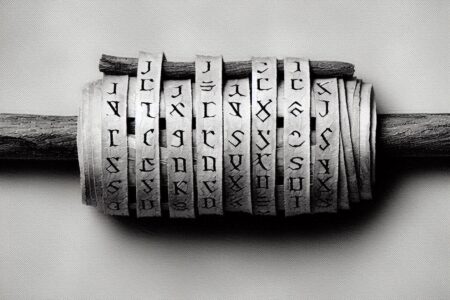
The Scytale

Introduction: Secrets on the Battlefield Imagine you’re a Spartan general during the Peloponnesian War. You need to send urgent orders to your troops—but if the enemy intercepts your message, disaster could strike. Enter the scytale, a simple yet ingenious device that allowed the Spartans to keep military communications secret. The scytale is one of the …

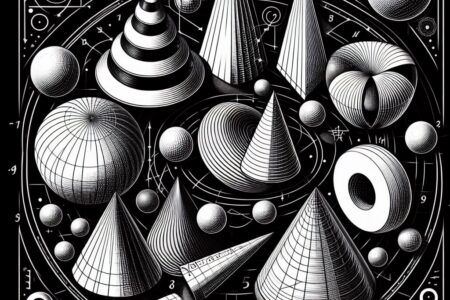
Conic Sections

Conic Sections: A Journey Through History Conic sections are among the most important and enduring concepts in mathematics, with applications spanning from geometry and physics to astronomy and engineering. These shapes, which include circles, ellipses, parabolas, and hyperbolas, arise from the intersection of a plane and a double-napped cone. The development of the theory of …

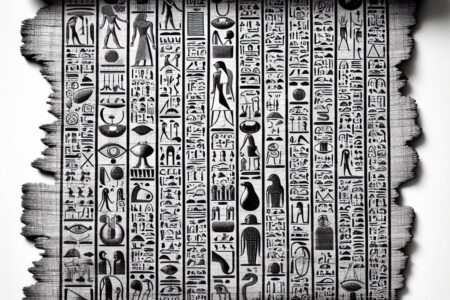
Rhind Mathematical Papyrus

Rhind Mathematical Papyrus

The Rhind Mathematical Papyrus is an ancient Egyptian document, dating back to around 1550 BCE, that provides a detailed insight into the mathematics practiced by the Egyptians. Named after Alexander Henry Rhind, the Scottish antiquarian who purchased it in 1858, the papyrus is a scroll over 5 meters long and contains 84 mathematical problems and …

the_irrational_number_pi_circles

Pi – π

The History and Mystery of Pi: From Ancient Babylon to Modern Mathematics Pi, denoted by the Greek letter π, is perhaps one of the most famous and intriguing mathematical constants. Defined as the ratio of a circle’s circumference to its diameter, pi is an irrational number, meaning it cannot be expressed as a simple fraction …

The Babylonian Number System tablet

The Babylonian Number System

An Ancient Approach to Mathematics The Babylonian civilization, which thrived in Mesopotamia (modern-day Iraq) from around 1894 BCE to 539 BCE, made significant contributions to the field of mathematics. One of their most enduring legacies is the Babylonian number system, a positional system that served as the foundation for later numerical systems, including our modern …