Cryptography in World War II: The Secret War Behind the Front Lines
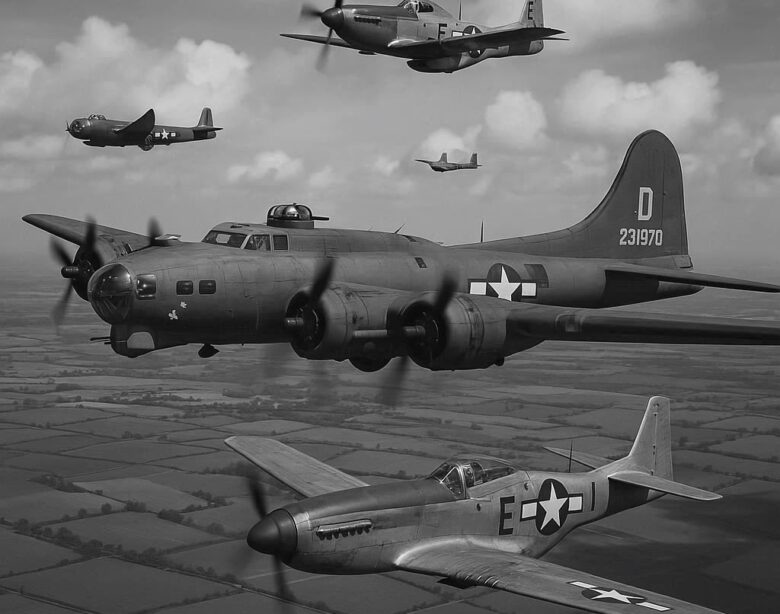
When we think of World War II, images of tanks, planes, and soldiers often come to mind. Yet behind the battles on land, sea, and air, there was another war being waged in silence—one fought with ciphers, codes, and machines. This was the cryptographic war, and its outcome was just as decisive as any tank battle or naval clash.
From the German Enigma to Japan’s Purple cipher, from the British codebreakers at Bletchley Park to American efforts at Pearl Harbor and beyond, cryptography shaped the course of the war. It saved lives, shortened battles, and ultimately changed the way nations thought about intelligence and secrecy.
The Enigma of Enigma
The most famous cipher machine of WWII was the Enigma, used by the German military to encrypt communications. At first glance, it looked like a typewriter, but inside it contained a series of rotors and electrical circuits that produced millions of possible letter substitutions.
To the Allies, Enigma seemed unbreakable. Every day, the Germans changed the machine’s settings, creating a staggering number of possible combinations. A message intercepted on one day would be useless by the next.
But mathematicians, engineers, and linguists joined forces to crack it. Polish cryptographers made the first breakthroughs in the 1930s, handing their insights to the British. At Bletchley Park, Alan Turing and his team built the Bombe machine, which automated the search for Enigma’s daily settings. By mid-war, Allied intelligence could read vast amounts of German military traffic, from U-boat locations to Luftwaffe strategies.
Historians now estimate that breaking Enigma shortened the war in Europe by at least two years.
Japanese Codes and the Pacific War
While the British focused on Enigma, the Americans faced a different challenge in the Pacific. Japanese diplomats and military leaders used several codes, the most notorious being the Purple cipher machine for diplomatic traffic and JN-25 for naval communications.
At a secret facility nicknamed Station HYPO in Pearl Harbor, American cryptographers, including Joseph Rochefort, worked tirelessly to crack Japanese naval codes. Their work paid off in 1942, when decrypted messages revealed that the Japanese were planning an attack at Midway Atoll.
Armed with this knowledge, Admiral Chester Nimitz set a trap. The Battle of Midway became the turning point of the Pacific War, shifting momentum to the Allies. Without cryptography, Midway might have been a devastating defeat instead of a decisive victory.
Everyday Codes and Field Ciphers
Not all cryptography in WWII relied on machines. Armies used field ciphers, codebooks, and manual systems to protect battlefield messages. Some were simple substitution ciphers; others used complex grids or one-time pads.
However, poor practices often led to vulnerabilities. German forces sometimes repeated key phrases or reused code settings, giving Allied analysts clues. Likewise, sloppy communications could undo the most sophisticated ciphers.
One of the most effective manual systems was the Navajo Code Talkers in the U.S. Marines. By using their native language as the basis for a spoken code, Navajo radio operators provided fast, secure communication in the Pacific Theater. Japanese forces, unfamiliar with the language, could never break it.
The Secret War’s Impact
The success of Allied codebreaking had ripple effects far beyond the war.
- Military strategy: Access to enemy communications allowed the Allies to anticipate attacks, mislead the Axis, and safeguard supply lines.
- Technology: The demands of cryptanalysis spurred the development of early computers, like the British Colossus, the first programmable electronic digital computer.
- Secrecy and intelligence: WWII cemented cryptography as a cornerstone of national security. After 1945, agencies like GCHQ in Britain and the NSA in the U.S. grew directly from wartime cryptographic organizations.
Cryptography’s Legacy
World War II showed the world that information could be as powerful as weapons. The breakthroughs at Bletchley Park, Pearl Harbor, and countless other secret facilities laid the foundations for modern computing, artificial intelligence, and cybersecurity.
Today, every time you send an encrypted message, log into a bank account, or browse the internet securely, you rely on systems that trace their lineage back to wartime cryptography.
Conclusion: The Silent Battlefield
Cryptography in World War II was a battle of minds as much as machines. It was fought not with bullets and bombs, but with mathematics, logic, and language. Yet its victories saved millions of lives and reshaped the future of technology.
The codebreakers of WWII worked in secrecy, often without recognition during their lifetimes. But their legacy lives on—in the computers we use, the security we depend on, and the freedom their hidden war helped preserve.
Please Visit Our Sponsors:
We only support vendors that we use ourselves in our home. The links below are our own links or affiliate links but know that we use all of these now, or have in the past. As the author/creator of this blog, I also tutor mathematics on Wyzant, sell on Etsy, create content on TpT, and learn Korean on Rosetta Stone.