Cryptography—the science of encoding and protecting information—has shaped human civilization for over two thousand years. From the simple substitution ciphers of the Romans to the complex algorithms powering today’s digital security, cryptography reflects humanity’s dual desire for secrecy and communication. At its heart lies mathematics, the universal language that makes encryption possible. The story of cryptography is also the story of mathematical progress: each new cipher, breakthrough, or code-breaking method has drawn upon deeper mathematical insights.
This post traces the history of cryptography, showing how it connects to key figures in mathematics and science—spanning ancient civilizations, the Islamic Golden Age, the Renaissance, and the modern digital revolution.
Ancient Beginnings: Secrecy in Symbols
The earliest forms of cryptography were rudimentary. Ancient Egyptians sometimes used hieroglyphic substitutions, though largely for artistic or ceremonial effect. The first widely recognized cipher appeared in classical Greece, where the scytale, a tool used by the Spartans, provided a transposition cipher by wrapping a strip of parchment around a rod of fixed diameter.
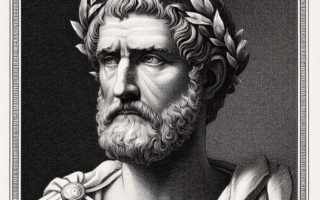
But the most famous cipher of antiquity was the Caesar cipher, attributed to Julius Caesar (100–44 BCE). This simple substitution cipher shifted letters of the alphabet by a fixed amount. For instance, a shift of three turns HELLO into KHOOR. Though trivial by today’s standards, the Caesar cipher demonstrated how mathematics—in this case, modular arithmetic—could systematize secrecy.
The Caesar cipher’s mathematical underpinnings anticipate modern number theory. In fact, concepts such as modular addition and cyclic structures that underlie Caesar’s scheme are also foundational to modern cryptography like RSA. Caesar, of course, could not have imagined such links, but his cipher remains a symbolic starting point for the mathematics of secrecy.
Cryptography and Mathematics in the Islamic Golden Age
While Europe descended into the Middle Ages, the Islamic world became a hub of scholarship, preserving and extending Greek, Indian, and Persian knowledge. One of the great contributions was to cryptography itself.
In the 9th century, al-Kindi, a mathematician, scientist, and philosopher, wrote the first known treatise on cryptanalysis: A Manuscript on Deciphering Cryptographic Messages. Al-Kindi introduced frequency analysis, a mathematical method of studying letter frequencies to break substitution ciphers. This insight shifted cryptography from mere craft to systematic science, fusing linguistics and mathematics.
Meanwhile, mathematics flourished in Baghdad’s House of Wisdom. Scholars like al-Khwarizmi (the father of algebra) and later al-Fazari influenced the computational methods that would eventually underpin cryptography. The decimal system and algorithms imported from India spread through their work, providing tools essential for later advances.
The Renaissance: Codes, Commerce, and Science
The Renaissance reawakened European science, and with it, cryptography. In Italy, Leon Battista Alberti (1404–1472), known as the “father of Western cryptography,” invented the polyalphabetic cipher, using a cipher disk to shift alphabets mid-message. His method resisted frequency analysis, a leap forward in cryptographic complexity.
Later, Giovanni Battista della Porta and Blaise de Vigenère refined polyalphabetic ciphers. The Vigenère cipher, long called “le chiffre indéchiffrable” (the indecipherable cipher), resisted cryptanalysis for centuries until broken in the 19th century.
Meanwhile, mathematics itself was undergoing transformation. René Descartes revolutionized geometry with his coordinate system, while Pierre de Fermat and Marin Mersenne advanced number theory and probability. These seemingly abstract fields would prove crucial centuries later when cryptography turned digital.
Early Modern Science and the Rise of Probability
The 17th and 18th centuries introduced new mathematical frameworks. Isaac Newton and Gottfried Wilhelm Leibniz developed calculus, while Jacob and Johann Bernoulli pioneered probability theory. Probability directly influenced cryptanalysis: codebreakers needed to measure likelihoods and patterns, not just frequencies.
During this time, states increasingly used cryptography for diplomacy and war. The Zimmermann Telegram in World War I—an intercepted and decrypted German message proposing alliance with Mexico—demonstrated cryptography’s role in geopolitics. Mathematics, secrecy, and power became inseparable.
Cryptography in the Age of Machines
The 20th century brought an explosion of mathematical cryptography, driven by war and computation.
World War II and Alan Turing
World War II marked a turning point. The German Enigma machine, with its polyalphabetic rotor ciphers, challenged the Allies with staggering complexity. Breaking Enigma required not just linguistic ingenuity but deep mathematics.
At Bletchley Park, Alan Turing and his colleagues used permutation group theory, probability, and machine design to automate cryptanalysis. Turing’s Bombe machine and mathematical models laid the groundwork for modern computer science. His contribution showed how cryptography drove the invention of digital computing itself.
Claude Shannon and the Mathematics of Secrecy
In the 1940s, American mathematician Claude Shannon, often called the “father of information theory,” gave cryptography a rigorous mathematical foundation. His paper Communication Theory of Secrecy Systems (1949) introduced concepts like entropy, redundancy, and diffusion—still central to both coding theory and cryptography today. Shannon demonstrated that the one-time pad was mathematically unbreakable, while also setting criteria for secure ciphers.
Number Theory Becomes Central: RSA and Beyond
In the 1970s, cryptography underwent a second revolution. Until then, most encryption had relied on secret keys shared privately. But the problem of securely exchanging keys grew insurmountable in an interconnected world.
Enter public-key cryptography, pioneered by Whitfield Diffie, Martin Hellman, and later Ron Rivest, Adi Shamir, and Leonard Adleman with the RSA algorithm. RSA relies on number theory: the difficulty of factoring large prime products. Here, the legacy of Euclid’s algorithm, Euler’s totient function, and Fermat’s little theorem became more than abstract theorems—they were the backbone of global digital security.
Around the same time, Elliptic Curve Cryptography (ECC) emerged, drawing on deep mathematics studied centuries earlier by Niels Henrik Abel, Carl Friedrich Gauss, and Adrien-Marie Legendre. What was once “pure math” had become indispensable for securing emails, financial transactions, and digital identities.
Cryptography in the Computer Age
By the late 20th and early 21st centuries, cryptography had become inseparable from computing and science. Andrey Kolmogorov’s work on complexity, John von Neumann’s architecture for modern computers, and Kurt Gödel’s logical insights all influenced cryptographic thinking.
Today, cryptography secures the backbone of the internet—HTTPS protocols, blockchain systems like Bitcoin, quantum-resistant algorithms under development. Fields like lattice-based cryptography and homomorphic encryption represent the cutting edge, where number theory, algebra, and computer science collide.
Mathematics, Science, and the Eternal Dance of Secrecy
From Caesar’s shift ciphers to Shannon’s information theory and RSA’s prime factorizations, cryptography has always been tied to mathematics. Yet it also shaped science itself: spurring the invention of computers, influencing statistics, and driving advances in pure mathematics.
The history of cryptography reminds us that secrecy is not just about hiding—it is about communication, trust, and the interplay between abstract thought and practical need. Mathematicians like al-Kindi, Descartes, Gauss, Euler, Turing, Shannon, and Rivest all demonstrate that the quest to protect information has profoundly advanced human knowledge.
And the story is far from over. As quantum computing threatens RSA and ECC, cryptographers return to the well of mathematics—algebra, geometry, and number theory—to forge the next generation of secrets.
Conclusion
Cryptography is one of the most human of sciences. Born from the need for secrecy in love, war, and diplomacy, it grew into a rigorous mathematical discipline that underpins modern technology. Its history is a thread connecting Caesar’s Rome, al-Kindi’s Baghdad, Renaissance Italy, Turing’s Bletchley Park, and the servers powering today’s internet.
In short: from Caesar to computers, cryptography is the mathematics of trust.
Please Visit Our Sponsors:
We only support vendors that we use ourselves in our home. The links below are our own links or affiliate links but know that we use all of these now, or have in the past. As the author/creator of this blog, I also tutor mathematics on Wyzant, sell on Etsy, create content on TpT, and learn Korean on Rosetta Stone.